



Table of Contents
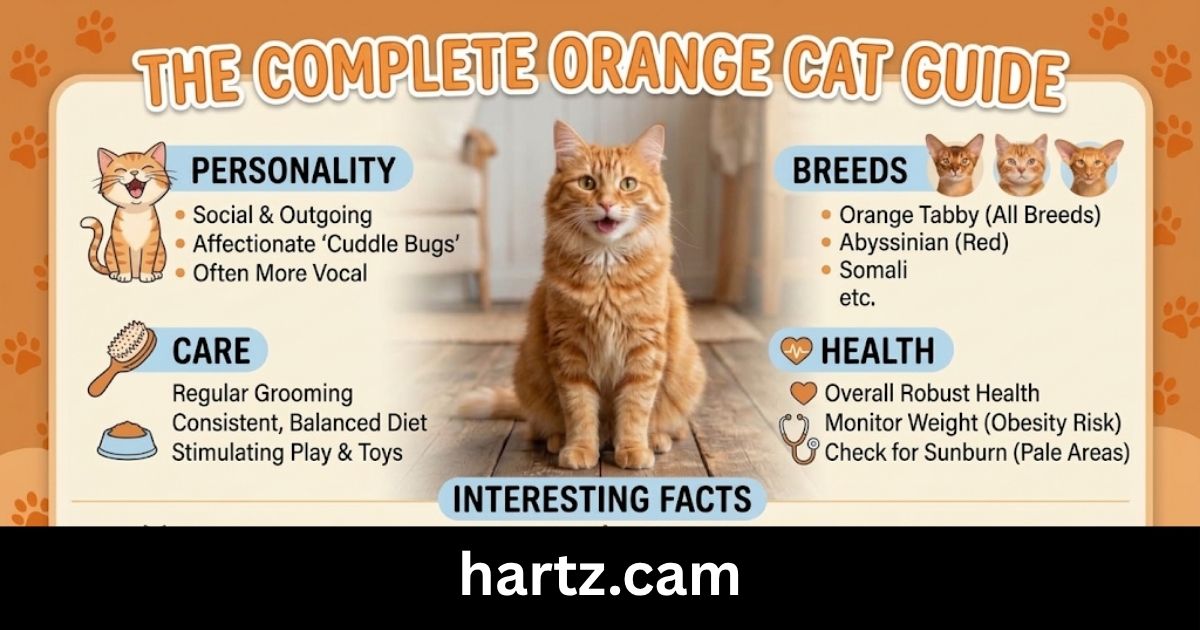
An orange cat is easy to recognize because of its beautiful ginger, golden, or reddish-orange coat. These cats are popular among pet lovers for their charming appearance, playful behavior, and affectionate personalities. From fluffy orange tabbies to short-haired ginger kittens, orange cat come in different sizes, patterns, and temperaments.
If you are thinking about adopting an orange cat or already have one at home, understanding its personality, nutritional needs, grooming requirements, and overall health can help you provide the best possible care. This guide explores everything you need to know about orange cats, including common myths, popular coat patterns, and practical pet wellness tips.
What Is an Orange Cat?
An orange cat is a domestic cat with an orange, ginger, red, or golden-colored coat. The color can range from pale cream and honey to deep reddish-orange. Many orange cats have stripes, swirls, spots, or lighter markings that create their distinctive appearance.
Orange is a coat color rather than a specific cat breed. This means orange cats can belong to many different breeds or be mixed-breed domestic cats.
The orange coat color is associated with a pigment called pheomelanin, which produces reddish and yellowish shades in animal fur. Many orange cats also have tabby markings, making them recognizable by the familiar stripes on their legs, faces, and bodies.
Why Are Orange Cats Usually Tabby Cats?
Most orange cats display some form of tabby pattern. Even cats that appear almost solid orange often have faint stripes or markings that become more noticeable in sunlight.
The tabby pattern is influenced by genes that control how color appears across the coat. Several common patterns can be found in orange cats.
Classic Orange Tabby
Classic orange tabbies have broad, swirling markings along their sides. Their coats may feature circular patterns that resemble marble or a butterfly shape.
Mackerel Orange Tabby
Mackerel tabbies have narrow vertical stripes running along their bodies. These stripes often resemble the pattern of a tiger, making this one of the most recognizable cat appearances.
Spotted Orange Tabby
Spotted cats have markings that appear as small spots or broken stripes. The spots can vary in size and distribution.
Ticked Orange Tabby
Ticked tabbies have individual hairs containing bands of different colors. Their coats may appear more evenly colored from a distance, with less obvious body stripes.
Many orange tabbies also have an M-shaped marking on their foreheads, a common feature of tabby cats.
Why Are Most Orange Cats Male?
One interesting fact about cats is that they are more commonly male than female.
The gene associated with orange coloration is linked to the X chromosome. Male cats typically have one X chromosome and one Y chromosome, while female cats typically have two X chromosomes.
A male cat generally needs the orange-color variant on his single X chromosome to display orange coloration. A female cat typically needs the orange variant on both X chromosomes to have a fully orange coat. Females with different variants can display a combination of orange and darker colors, as seen in many calico and tortoiseshell cats.
As a result, cats are more frequently male, although orange female cats are entirely normal and relatively common. Coat color does not determine a cat’s health, intelligence, or ability to become a loving companion.
Cat Personality and Behavior
cats have a reputation for being friendly, funny, social, and affectionate. Some owners describe their ginger cats as confident companions that enjoy following people around the house.
However, coat color alone does not determine personality. An cat’s behavior depends on genetics, early socialization, previous experiences, health, and its individual temperament.
Are Orange Cats Affectionate?
Many cats enjoy spending time with their owners. Some may sit beside people, seek attention, or curl up on a comfortable lap. Others are more independent and prefer affection on their own terms.
Building trust through gentle handling, positive reinforcement, and consistent routines can help an cat feel secure.
Are Cats Playful?
cats can enjoy chasing toys, climbing cat trees, exploring boxes, and participating in interactive games. Kittens are often especially energetic, although adult cats also benefit from regular play.
Provide toys that encourage natural hunting behaviors, such as chasing, stalking, and pouncing. Short play sessions throughout the day can help keep your cat physically active and mentally stimulated.
Are Orange Cats Intelligent?
cats can learn routines, recognize familiar people, respond to training, and solve simple food puzzles. Intelligence varies between individual cats rather than being determined by coat color.
You can encourage learning by using reward-based training, puzzle feeders, and games that allow your cat to explore safely.
Popular Cat Breeds
Because orange is a coat color rather than a breed, several types of cats can have ginger fur.
Domestic Shorthair
Domestic shorthair cats are among the most common cats. They have short coats that are generally easy to maintain. Their personalities and physical characteristics vary widely because they are not a single standardized breed.
Domestic Longhair
Domestic longhair cats can have fluffy orange coats, bushy tails, and longer fur around their necks and legs. They may require regular brushing to prevent tangles and mats.
Maine Coon
Maine Coons can have orange or red tabby coats. They are large cats known for their long fur, tufted ears, and substantial tails. Regular grooming helps maintain their thick coats.
Persian
Orange Persian cats have long, dense coats and rounded facial features. Their grooming needs can be considerable, and their facial structure may require extra attention to eye cleanliness and breathing comfort.
British Shorthair
British Shorthairs can display golden-orange or red-colored coats and have a sturdy build with a dense, plush coat. Their grooming needs are usually manageable with regular brushing.
American Shorthair
American Shorthairs occur in many colors and patterns, including orange tabby. They are generally sturdy cats whose individual activity levels and personalities can vary.
When adopting an cat, consider its temperament, health, grooming needs, and lifestyle compatibility rather than choosing based on coat color alone.
How to Care for an Orange Cat
Good cat care involves balanced nutrition, fresh water, exercise, grooming, a safe environment, and routine veterinary attention.
1. Provide Balanced Cat Food
Choose a complete and balanced cat food appropriate for your pet’s life stage. Kittens need food formulated for growth, while adult cats generally need an adult maintenance diet.
Senior cats may benefit from a diet tailored to their changing nutritional requirements. Cats with medical conditions may need veterinary-recommended food.
Read feeding guidelines on the packaging, but adjust portions according to your cat’s body condition, activity level, and veterinary advice. Avoid feeding excessive treats, and do not rely on human food as a replacement for a complete feline diet.
2. Keep Fresh Water Available
Fresh water should always be accessible. Wash water bowls regularly and place them in convenient locations away from dirty litter.
Some cats prefer drinking from a fountain, while others prefer ordinary bowls. Wet food can also contribute to daily water intake.
Contact a veterinarian if your cat suddenly drinks much more or much less than usual, particularly when accompanied by changes in urination, appetite, or energy.
3. Maintain a Healthy Weight
cats are not naturally more likely to become overweight simply because of their color. However, any cat can gain excess weight when calorie intake exceeds energy needs.
Measure meals, limit high-calorie treats, and encourage daily movement. Regularly check whether you can feel your cat’s ribs beneath a thin layer of fat and whether it has a visible waist when viewed from above.
Your veterinarian can help establish an appropriate target weight and feeding plan.
4. Brush the Coat Regularly
Short-haired orange cats often need brushing about once a week, although more frequent brushing may help during shedding seasons.
Long-haired cats usually benefit from daily or near-daily brushing to prevent mats and remove loose fur. Use a brush suitable for your cat’s coat and handle sensitive areas gently.
Bathing is generally unnecessary unless your veterinarian recommends it or the coat becomes unusually dirty.
5. Maintain Dental Health
Dental disease can affect cats of every coat color. Plaque and tartar buildup may cause gum inflammation, pain, and difficulty eating.
Regular veterinary dental examinations are important. If your cat tolerates it, gradually introduce toothbrushing with a cat-specific toothbrush and toothpaste. Never use human toothpaste, as some ingredients can be harmful to cats.
6. Provide Exercise and Enrichment
Indoor cats need opportunities to exercise and explore. Offer scratching posts, climbing structures, hiding places, and interactive toys.
Rotate toys to maintain interest and schedule daily play sessions. Food puzzles can provide mental stimulation while helping manage portions.
If your cat spends time outdoors, consider the risks of traffic, fights, parasites, and infectious diseases. A secure enclosure or supervised harness training can offer safer outdoor enrichment.
Common Health Concerns in Orange Cats
cats do not have a unique set of medical conditions caused by their coat color. Their health risks are influenced by age, genetics, breed, lifestyle, diet, and preventive care.
Obesity
Excess weight can increase the risk of diabetes, joint problems, and reduced mobility. Monitor body condition and discuss unexplained weight changes with a veterinarian.
Dental Disease
Bad breath, drooling, red gums, dropping food, or reluctance to eat may indicate dental discomfort. Cats often hide pain, so routine examinations are valuable.
Parasites
Fleas, ticks, intestinal worms, and certain mites can affect cats. Ask your veterinarian about appropriate preventive treatments based on age, lifestyle, and local risks.
Urinary Problems
Straining to urinate, repeatedly visiting the litter box, crying while urinating, or passing only small amounts of urine requires prompt veterinary attention.
A cat that cannot pass urine needs emergency veterinary care, particularly if it is male. Do not wait for symptoms to resolve on their own.
Skin and Coat Problems
Persistent itching, bald patches, redness, sores, or excessive shedding may signal allergies, parasites, infections, or other health problems. A veterinarian can identify the underlying cause and recommend suitable treatment.
Do Orange Cats Need Special Grooming?
Orange cats do not need special grooming solely because of their color. Their requirements depend mainly on coat length, skin condition, age, and lifestyle.
Light-colored areas of an orange coat can show dirt more easily, but frequent bathing is not usually necessary. Regular brushing, clean bedding, nail maintenance, and periodic checks of the ears, eyes, skin, and teeth are usually more useful.
Some cats may need extra grooming support as they age or if they have mobility problems. Introduce grooming gradually and reward calm behavior to make the experience more comfortable.
Orange Cat Myths and Interesting Facts
Orange cats are surrounded by popular internet jokes and cultural stories. Understanding the difference between entertainment and evidence helps owners appreciate their pets without relying on stereotypes.
- Orange cats are always male: False. Female orange cats exist, although they are less common.
- Every orange cat has the same personality: False. Temperament differs from one cat to another.
- Orange cats are always tabbies: Most display tabby markings, even when the pattern is faint.
- Orange cats are a separate breed: False. Orange is a coat color found across many breeds and mixed-breed cats.
- cats can have different eye colors: Their eyes may be green, amber, gold, copper, or other colors depending on genetics and individual development.
- Orange kittens change as they grow: Coat shades and markings can become more noticeable or appear slightly different as a kitten matures.
Orange cats are also popular in books, cartoons, films, and online videos, which has helped make ginger cats recognizable around the world.
How to Adopt an Orange Cat
If you want to welcome an cat into your home, consider visiting an animal shelter or reputable rescue organization. Many shelters have cats of different ages, coat patterns, and personalities.
Ask about the cat’s medical history, vaccination status, parasite prevention, and whether it has been spayed or neutered. If possible, spend time with the cat before adoption to understand its comfort level around people.
Prepare a quiet room with food, water, a litter box, bedding, toys, and a scratching surface. Give the cat time to adjust, especially if it has experienced a stressful environment.
If you already have other pets, introduce them gradually. Supervised, controlled introductions can reduce stress and help animals become familiar with one another.
A successful adoption depends on patience, preparation, and a long-term commitment to the cat’s physical and emotional well-being.
Frequently Asked Questions About Cats
1. Are orange cats rare?
Orange cats are not generally considered rare. They are found in many domestic cat populations, although the proportion of orange cats varies by location and population.
2. Are orange cats always male?
No. Orange cats can be male or female. The genetics of orange coloration make fully orange coats more common in males, but female orange cats are perfectly normal.
3. Are orange cats friendlier than other cats?
There is no strong scientific basis for assuming that orange cats are automatically friendlier than cats of other colors. Socialization, individual temperament, health, and past experiences play important roles.
4. What should I feed an orange cat?
Feed a complete and balanced feline diet appropriate for your cat’s age and health. Provide fresh water, control portions, and ask your veterinarian about any special nutritional needs.
5. How long do orange cats live?
Orange cats do not have a lifespan determined by their color. Many domestic cats live into their teens, and some live considerably longer. Preventive veterinary care, nutrition, safe living conditions, and genetics influence longevity.
6. Do orange cats shed a lot?
Shedding depends on coat length, season, genetics, and health. Short-haired orange cats may shed moderately, while long-haired cats often require more frequent brushing to manage loose fur.
7. Can orange cats live indoors?
Yes. Orange cats can thrive indoors when they have balanced nutrition, exercise, scratching opportunities, clean litter boxes, and mental stimulation. Indoor living can also reduce exposure to traffic and other outdoor hazards.
8. How can I tell if my orange cat is healthy?
A healthy cat generally has a stable appetite, normal drinking and urination habits, a clean coat, clear eyes, and a consistent activity level. Changes in behavior, breathing, weight, or litter-box habits should be discussed with a veterinarian.
Conclusion
An orange cat can make a wonderful companion, whether it has a short ginger coat, a fluffy orange tail, or striking tabby stripes. Although orange cat are often associated with playful and affectionate personalities, every cat has its own character and needs.
Providing balanced food, fresh water, regular grooming, daily enrichment, dental care, and preventive veterinary visits can help your cat remain comfortable and healthy. By focusing on individual needs rather than coat-color stereotypes, you can build a stronger bond with your pet.
Whether you are adopting an orange kitten or caring for an older ginger cat, consistent attention and responsible pet ownership are the foundations of a happy life together.