





Table of Contents
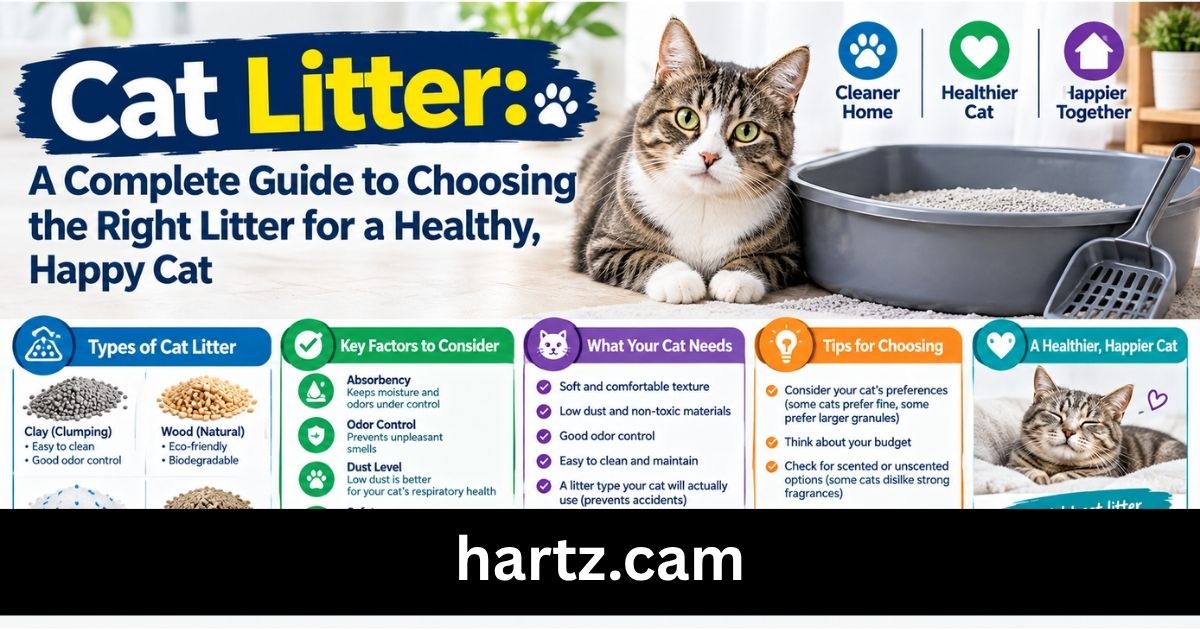
Choosing the right cat litter is an important part of responsible pet care. Cats spend a significant amount of time using their litter box, so the type of litter, cleanliness of the box, and overall setup can affect their comfort, hygiene, and bathroom habits. With so many choices available—including clumping clay, non-clumping litter, silica crystals, wood, paper, and natural plant-based options—it can be difficult to know which one is best.
This guide explains the different types of cat litter, how to choose the right option, how often to clean the litter box, and practical tips for maintaining a fresh and comfortable environment for your cat.
What Is Cat Litter?
Cat litter is a material placed inside a litter box to absorb urine, control odors, and provide cats with a suitable place to eliminate waste. Modern cat litter comes in many forms, with each type offering different levels of absorption, odor control, dust production, and ease of cleaning.
Cats can be particular about their bathroom environment. A litter that feels uncomfortable, produces excessive dust, has a strong fragrance, or is not cleaned regularly may cause a cat to avoid the litter box.
For pet wellness, maintaining a clean and appropriate litter box is just as important as providing nutritious food, clean water, exercise, and regular veterinary care.
Why Choosing the Right Cat Litter Matters
The right cat litter can make daily cleanup easier while helping your cat feel comfortable using the litter box. Cats have sensitive paws and strong senses of smell, so a litter that seems pleasant to a person may not be appealing to a cat.
A suitable litter should generally provide good absorption, reasonable odor control, and a texture your cat accepts. It should also be easy for you to clean consistently.
If your cat suddenly stops using its litter box, do not automatically assume the litter is the only problem. Changes in bathroom habits can sometimes be associated with stress, environmental changes, or medical conditions. Persistent or unusual elimination behavior should be discussed with a veterinarian.
Types of Cat Litter
Clumping Clay Cat Litter
Clumping clay litter is one of the most widely used options. It forms solid clumps when it comes into contact with urine, allowing owners to remove soiled areas without replacing all of the litter.
Its main advantages include convenient daily scooping, good moisture absorption, and generally effective odor control. Some varieties contain added fragrances, while unscented versions are also available.
However, some clay litters can create dust, so a low-dust formula may be preferable for households concerned about respiratory irritation or tracking.
Non-Clumping Cat Litter
Non-clumping litter absorbs moisture but does not form solid clumps. Depending on the product, it may be made from clay, plant materials, paper, or other substances.
Because urine can spread through the litter, non-clumping products may require more frequent complete changes. They can still be a practical option when properly maintained.
Silica Gel Crystal Litter
Silica crystal litter is made from absorbent silica gel crystals. The crystals can absorb significant amounts of moisture and help control odors.
This type of litter often lasts longer between complete changes when maintained correctly. However, individual cats may not like the texture of the crystals, particularly if they prefer softer litter.
Wood and Pine Cat Litter
Wood-based litter can be made from materials such as pine or other processed wood fibers. It may come in pellets or softer granules.
Many owners choose wood litter because it can provide a natural alternative to traditional clay. Depending on the product, it may also produce relatively little dust.
Paper Cat Litter
Recycled paper is another option, often available as pellets or soft pieces. Paper litter can be useful for cats with certain preferences and may be particularly convenient in some temporary-care situations.
It generally does not provide the same type of clumping action as traditional clumping clay, so cleaning routines can differ.
Plant-Based and Natural Cat Litter
Natural cat litter can be made from materials such as corn, wheat, grass, walnut shells, or other plant-based ingredients. These products may offer clumping and odor-control properties while appealing to owners looking for alternatives to mineral-based litter.
When selecting natural litter, check the product information carefully and introduce it gradually if your cat is accustomed to another type.
How to Choose the Best Cat Litter
There is no single cat litter that is perfect for every cat. Your pet’s preferences should be an important part of the decision.
Consider Texture
Cats can have strong preferences about how litter feels beneath their paws. Fine, sand-like textures are often familiar to cats because they resemble natural digging surfaces.
If your cat refuses a new litter, texture may be one reason. Introducing a new product gradually can make the transition easier.
Think About Odor Control
Odor control is important, especially in homes with multiple cats. However, heavily scented litter is not necessarily better.
Cats have much stronger senses of smell than humans, and some may avoid strongly fragranced litter. An effective unscented litter combined with frequent scooping can often provide good results.
Look for Low-Dust Options
Excessive dust can be inconvenient for both cats and owners. A low-dust formula may help keep the surrounding area cleaner and reduce airborne particles during pouring and scooping.
Consider Tracking
Some litter sticks to a cat’s paws and can be carried around the home. A litter mat placed outside the box can catch loose particles before they spread throughout the house.
How Often Should You Clean a Cat Litter Box?
Daily maintenance is one of the most important parts of litter box care. Remove urine clumps and solid waste regularly rather than allowing waste to accumulate.
For many households, scooping at least once a day is a useful routine. Homes with multiple cats may need more frequent cleaning.
The entire litter box should also be emptied and cleaned according to the litter type and household needs. Wash the box with mild soap and water, rinse it thoroughly, and dry it before adding fresh litter.
Avoid using strong chemical cleaners or overpowering fragrances that could discourage your cat from using the box.
How Much Cat Litter Should You Put in the Box?
Most cats need enough litter to dig and cover their waste comfortably. A layer of around 2 to 3 inches is commonly suitable, although individual preferences vary.
Some cats prefer deeper litter, while others dislike having too much material under their paws. Observe your cat’s behavior and adjust the depth accordingly.
Keeping the litter level consistent can also help your cat become comfortable with the box.
How Many Litter Boxes Does a Cat Need?
A commonly recommended guideline is one litter box per cat plus one extra. For example, a household with two cats may benefit from three boxes.
The boxes should ideally be placed in quiet, accessible locations. Avoid putting every box in the same area if possible, because cats may benefit from having multiple bathroom locations.
In multi-level homes, having a litter box on different floors can also make access easier.
Where Should You Place a Cat Litter Box?
Choose a quiet location where your cat can use the box without being constantly disturbed. The area should be easy for your cat to reach and should provide a reasonable sense of safety.
Avoid placing the box directly beside food and water bowls. Cats generally prefer separating their eating and elimination areas.
The litter box should also be easy for you to access so that daily cleaning does not become inconvenient.
Common Cat Litter Problems
Bad Odor
Persistent odor is usually a sign that the litter needs more frequent scooping or that the box requires a deeper cleaning. In multi-cat homes, additional boxes may also help.
Litter Tracking
A litter mat can reduce tracking around the house. Choosing a larger-grain or lower-tracking litter may also help.
Cat Refusing the Litter Box
If your cat suddenly stops using its litter box, consider recent changes such as a new litter, a different box location, household stress, or a dirty box.
However, sudden changes in urination or defecation can have medical causes. If the behavior continues or is accompanied by signs such as straining, frequent attempts to urinate, blood, crying, vomiting, or obvious discomfort, seek veterinary advice promptly.
Tips for a Cleaner and Healthier Litter Area
Good litter box hygiene does not have to be complicated. Scoop waste regularly, keep enough fresh litter in the box, and clean the box periodically.
Use a dedicated scoop and keep the surrounding floor clean. A litter mat can help catch particles before they spread through the home.
Pregnant people and individuals with weakened immune systems may need to take additional precautions when handling cat feces because of the risk of Toxoplasma gondii exposure. Ask a healthcare professional about appropriate precautions for your circumstances.
Frequently Asked Questions About Cat Litter
1. What is the best cat litter?
The best cat litter depends on your cat’s preferences and your household needs. Texture, dust, odor control, absorbency, tracking, and ease of cleaning are important factors.
2. Is clumping cat litter better than non-clumping litter?
Clumping litter can make daily cleaning easier because urine forms removable clumps. Non-clumping litter can also work well but may require more frequent complete replacement.
3. How often should cat litter be scooped?
For most households, scooping at least once daily is a good starting point. Multiple-cat households may need to scoop more frequently.
4. Can you change a cat’s litter?
Yes, but gradual changes are often easier for cats to accept. Mix increasing amounts of the new litter with the old litter over several days rather than changing everything suddenly.
5. Why does my cat throw litter outside the box?
Some cats naturally kick litter while digging or covering their waste. A larger litter box, a litter mat, or a lower-tracking litter can help reduce the mess.
6. How deep should cat litter be?
Around 2 to 3 inches is a common starting point, but your cat may prefer a different depth. Adjust it according to your cat’s behavior.
7. Should cat litter be scented?
Not necessarily. Some cats tolerate scented litter, while others avoid strong fragrances. Unscented litter can be a good choice for cats that are sensitive to smells.
8. Why is my cat suddenly avoiding the litter box?
A dirty box, litter change, stress, location change, or another environmental issue can contribute. Medical problems can also cause bathroom changes, so sudden or persistent litter box avoidance deserves veterinary attention.
Conclusion
Choosing the right cat litter is an important part of creating a comfortable and hygienic environment for your pet. Clumping clay, crystal, paper, wood, and plant-based litters all have different characteristics, and the best choice depends on your cat’s preferences as well as your cleaning routine.
Regular scooping, proper litter depth, sufficient litter boxes, and a quiet location can make a significant difference. Most importantly, pay attention to changes in your cat’s bathroom habits. A clean litter box supports everyday pet wellness, while unusual or persistent changes may require professional veterinary advice.
With the right litter and consistent care, you can create a cleaner, more comfortable litter box environment that works well for both you and your cat.