






Table of Contents
Introduction
The Bernedoodle is a popular designer dog known for its friendly personality, intelligence, and adorable appearance. This crossbreed combines the Bernese Mountain Dog with the Poodle, creating a companion that can be affectionate, playful, and loyal. Many families appreciate this dog’s social nature and ability to become closely attached to household members.
Before bringing one home, it is important to understand its grooming requirements, exercise needs, nutrition, training, and potential health concerns. This guide explains everything prospective owners should know about choosing and caring for this popular companion.
What Is a Bernedoodle?
A Bernedoodle is a cross between a Bernese Mountain Dog and a Poodle. Breeders developed this combination to bring together the gentle personality of the Bernese Mountain Dog and the intelligence of the Poodle.
These dogs come in different sizes, colors, and coat textures. Their appearance depends on the genetic characteristics inherited from their parents.
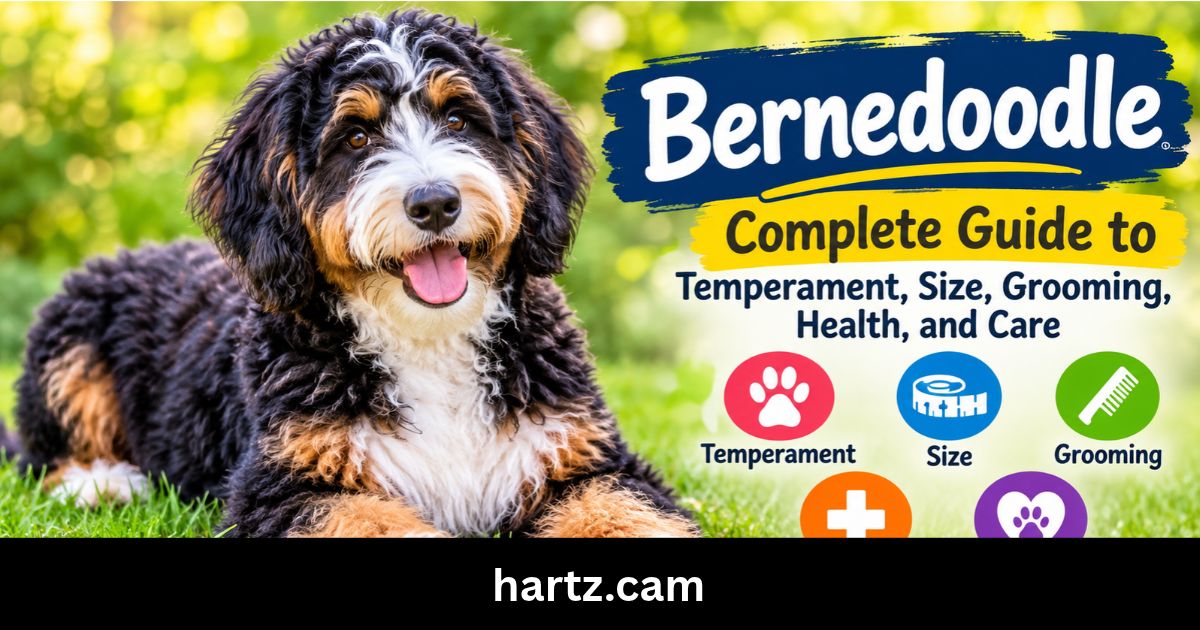
Common coat colors include black, white, brown, cream, and combinations of these shades. Some have attractive tri-color markings.
Although this crossbreed is sometimes advertised as hypoallergenic, no dog is completely allergy-free. Shedding and allergen levels vary between individual animals.
Different Sizes of Bernedoodle
One important characteristic of this crossbreed is its variety of sizes. The adult weight mainly depends on the size of the Poodle used in breeding.
Standard Size
Standard dogs are the largest variety and generally weigh between 60 and 90 pounds. They need sufficient living space, regular physical activity, and consistent training.
Miniature Size
Miniature varieties commonly weigh approximately 25–49 pounds. They offer a smaller alternative while retaining many of the personality characteristics associated with their parent breeds.
Tiny Size
Tiny varieties generally weigh around 10–24 pounds. They are often developed through multigenerational breeding involving smaller Poodles.
Despite their compact bodies, these dogs still require daily exercise, attention, and mental stimulation.
Personality and Temperament
The Bernedoodle is generally recognized for its affectionate, social, and playful personality. However, individual behavior depends on genetics, training, early experiences, and environment.
Friendly Nature
These dogs often enjoy spending time with their owners. They may follow family members around the house, participate in activities, and seek attention.
Their affectionate nature makes them attractive companions for people who enjoy interacting with their pets.
Intelligence
Poodles are known for their intelligence, and many puppies inherit strong learning abilities. They can understand basic commands, household routines, and training exercises.
Interactive toys and problem-solving activities can help keep their minds active.
Playfulness
Many individuals enjoy outdoor adventures, walking, playing fetch, and spending time with children. Their energy levels vary, so owners should develop an activity routine that matches their dog’s needs.
Family Compatibility
A Bernedoodle can become a wonderful family companion when properly trained and socialized. Many are gentle around children, although interactions with young kids should always be supervised.
Coat Types and Colors
Coat appearance varies considerably because this crossbreed inherits characteristics from two different parent breeds.
Wavy Coat
Wavy coats have a soft appearance and may be relatively manageable. However, regular brushing is necessary to prevent tangles and uncomfortable mats.
Curly Coat
Curly coats often resemble those of Poodles. Loose hair can become trapped in the curls, making frequent brushing and professional grooming especially important.
Straight Coat
Straight coats generally resemble the appearance of Bernese Mountain Dogs. Dogs with this coat type may shed more noticeably than those with curlier coats.
Popular Colors
Common color combinations include:
- Black and white
- Black and brown
- Chocolate
- Cream
- Sable
- Tri-color
- Solid black
Tri-color coats are especially recognizable because they combine black, white, and rust-colored markings.
Grooming and Maintenance
Proper grooming is essential for maintaining a healthy coat and comfortable skin. Dogs with curly or wavy hair may develop mats if their coats are neglected.
Brushing
Brush your pet several times each week. Dogs with dense or curly coats may require daily brushing.
Pay particular attention to areas behind the ears, underneath the legs, around the collar, and near the tail.
Professional Grooming
Professional grooming is commonly recommended every six to eight weeks. Groomers can trim excessive hair, remove tangles, and maintain a manageable coat length.
Bathing
Bathe your dog when necessary using a gentle shampoo formulated specifically for pets. Avoid excessive bathing because it may contribute to skin dryness.
Nail and Dental Care
Trim nails regularly to prevent discomfort while walking. Brush teeth with dog-safe toothpaste and arrange routine veterinary dental examinations.
Regular ear inspections are also important, particularly for dogs with floppy ears.
Exercise and Physical Activity
The Bernedoodle needs regular physical activity to maintain a healthy body and balanced behavior. Exercise requirements depend on age, size, fitness, and individual energy levels.
Daily walks provide opportunities for movement and exploration. Many adult dogs also enjoy:
- Playing fetch.
- Exploring safe outdoor areas.
- Swimming under supervision.
- Walking on different trails.
- Playing interactive games.
Puppies should receive age-appropriate exercise because their developing bones and joints should not be exposed to excessive running or jumping.
Mental activities are equally valuable. Puzzle feeders, scent games, and obedience exercises provide opportunities to use natural intelligence.
Nutrition and Feeding Requirements
A balanced diet supports healthy development, muscle maintenance, digestion, and overall well-being.
Choose complete and balanced dog food appropriate for your pet’s age, weight, and activity level.
Puppy Nutrition
Growing puppies need food formulated for development. Large-breed puppies may benefit from specially designed formulas that support controlled growth and healthy bone development.
Adult Nutrition
Adult dogs generally benefit from a consistent feeding schedule and carefully measured portions.
Many owners divide daily food into two meals. However, the correct amount depends on calorie requirements, body condition, and the food’s nutritional content.
Healthy Treats
Treats are useful during training, but they should not account for more than approximately 10% of daily calories.
Always provide fresh drinking water and consult a veterinarian if your pet experiences digestive problems or suspected food allergies.
Common Health Problems
Like other crossbreeds, the Bernedoodle can inherit certain health conditions from its parent breeds. Responsible breeding and preventive veterinary care can help reduce some risks.
Hip and Elbow Dysplasia
These joint conditions can affect mobility and cause discomfort. Symptoms may include stiffness, difficulty standing, and reluctance to exercise.
Responsible breeders should arrange appropriate health screening for breeding animals.
Eye Conditions
Inherited eye conditions may affect some individuals. Regular examinations can help veterinarians identify abnormalities and recommend appropriate treatment.
Skin Allergies
Environmental allergies and skin sensitivities can cause itching, redness, and excessive licking.
Persistent symptoms should be evaluated by a veterinarian rather than treated with random products.
Bloat
Large, deep-chested dogs can be vulnerable to gastric dilatation-volvulus, commonly called bloat.
Warning signs include abdominal swelling, excessive drooling, restlessness, and unsuccessful attempts to vomit. This condition requires immediate emergency veterinary attention.
Progressive Retinal Atrophy
Progressive retinal atrophy is an inherited disorder that can gradually damage vision. Genetic testing of breeding dogs may help identify certain inherited risks.
Training and Socialization
The Bernedoodle generally responds well to positive reinforcement and consistent training. Early education helps develop confidence and appropriate household behavior.
Basic Obedience
Begin with simple commands such as sit, stay, come, down, and leave it. Short training sessions help maintain attention and make learning enjoyable.
Reward desirable behavior with praise, treats, and playtime.
Early Socialization
Introduce puppies to different environments, sounds, people, and healthy, vaccinated dogs through positive experiences.
Proper socialization can help reduce fear and improve confidence in unfamiliar situations.
Preventing Separation Anxiety
These dogs often enjoy human companionship. Some may become uncomfortable when left alone for extended periods.
Gradually introduce short periods of independence and provide safe toys, comfortable resting areas, and predictable daily routines.
Is This Dog Suitable for Families?
A Bernedoodle can be an excellent choice for families that have enough time for exercise, grooming, training, and companionship.
Its affectionate personality and intelligence make it appealing to many households. However, potential owners should consider the dog’s expected adult size and daily requirements.
Families with children should teach appropriate pet-handling habits and supervise interactions. Introductions to other household animals should also be gradual and controlled.
Apartment living may work for smaller varieties, provided they receive enough daily exercise and attention.
Lifespan and Long-Term Care
The average Bernedoodle lifespan is approximately 12–15 years, although individual dogs may live shorter or longer lives.
Genetics, nutrition, exercise, preventive healthcare, and body weight all influence long-term well-being.
Owners can support healthy aging by arranging regular veterinary examinations, maintaining dental hygiene, providing balanced meals, and monitoring changes in behavior.
As dogs grow older, their activity routines and nutritional needs may require adjustments.
How Much Does a Bernedoodle Cost?
The purchase price varies according to breeder reputation, location, size, generation, coat characteristics, and health testing.
In the United States, puppies from established breeders may cost approximately $2,000–$5,000 or more.
Additional expenses include:
- Food and treats.
- Veterinary examinations.
- Vaccinations.
- Professional grooming.
- Training classes.
- Toys and accessories.
- Emergency healthcare.
Adoption from a reputable rescue organization may offer a more affordable alternative.
Frequently Asked Questions
1. Is a Bernedoodle good for first-time owners?
Yes, this breed can suit responsible first-time owners who are prepared to provide consistent training, grooming, exercise, and veterinary care.
2. Does a Bernedoodle shed?
Shedding depends on coat genetics. Curly and wavy varieties may shed less visibly, while straighter coats can shed more.
3. Is a Bernedoodle hypoallergenic?
No dog is completely hypoallergenic. Individuals with allergies should spend time around the breed before adoption.
4. How big can a Bernedoodle become?
Standard varieties may weigh 60–90 pounds, miniature varieties approximately 25–49 pounds, and tiny varieties around 10–24 pounds.
5. How often should a Bernedoodle be groomed?
Regular brushing is important, while professional grooming is commonly recommended every six to eight weeks.
6. Can a Bernedoodle live in an apartment?
Yes, smaller varieties can adapt to apartment living when provided with adequate exercise, training, and mental stimulation.
7. How long does a Bernedoodle live?
The typical lifespan is approximately 12–15 years, depending on genetics, healthcare, and lifestyle.
8. Are Bernedoodles easy to train?
They are generally intelligent and responsive to positive reinforcement. Early training and consistent routines help develop good behavior.
Conclusion
The Bernedoodle is an affectionate, intelligent, and playful companion that can bring happiness to many households. Its combination of Bernese Mountain Dog and Poodle characteristics makes it an attractive option for families and individuals seeking a loyal pet.
However, responsible ownership requires regular grooming, balanced nutrition, physical activity, socialization, and preventive veterinary care. Understanding these responsibilities before adoption helps ensure a comfortable and healthy life.
With patience, attention, and proper care, this wonderful companion can become a valued member of the family.