






Table of Contents
Introduction
Choosing the right dog can be challenging, especially for people who dislike finding pet hair on furniture, clothing, carpets, and floors. Fortunately, several dog breeds are known for shedding very little compared with other dogs. These breeds are often called non shedding dogs and can be excellent companions for families, individuals, and people living in apartments.
Although no dog is completely non-shedding, some breeds release significantly less loose hair into their surroundings. Many have curly, continuously growing, or hair-like coats that require regular grooming. Understanding their characteristics, care requirements, and personalities can help you find the right companion.
What Are Non Shedding Dogs?
Non shedding dogs are breeds that lose very little hair compared with typical shedding breeds. Most dogs naturally shed old or damaged hair as part of their coat’s growth cycle. However, certain breeds have coats that retain loose hair instead of releasing it around the home.
These dogs are popular among people who prefer cleaner furniture and fewer loose hairs on their clothing. They can also be suitable for people with mild pet allergies, although low shedding does not mean allergy-free.
Regular grooming is particularly important because loose hair can become trapped in curly or long coats, creating tangles and mats.
Best Non-Shedding Dog Breeds
Different dog breeds have different sizes, temperaments, exercise requirements, and grooming needs. Here are some popular options to consider.
1. Poodle
The Poodle is one of the most recognizable low-shedding dog breeds. Available in Standard, Miniature, and Toy sizes, Poodles can suit different living environments.
Their curly coats trap many loose hairs, reducing the amount of fur released around the house. Poodles are also highly intelligent, active, and easy to train. They enjoy mental stimulation, regular exercise, and spending time with their families.
However, their coats require frequent brushing and professional grooming to prevent painful tangles.
2. Bichon Frise
The Bichon Frise is a small, cheerful dog known for its fluffy white coat and friendly personality. It sheds very little, making it a popular choice among people searching for non shedding dogs.
These dogs are affectionate, playful, and generally enjoy being around people. Their compact size makes them suitable for apartment living when they receive enough daily activity.
Their thick coats need regular brushing and professional trimming to maintain their appearance and prevent matting.
3. Maltese
Maltese dogs are small companion animals with long, silky white hair. Unlike many traditional shedding breeds, they release relatively little loose hair.
They are affectionate, lively, and enjoy close relationships with their owners. Their small size makes them suitable for smaller homes and apartments.
Daily brushing is recommended for Maltese dogs with long coats. Owners who prefer easier maintenance can choose a shorter puppy-style haircut.
4. Yorkshire Terrier
Yorkshire Terriers, commonly called Yorkies, are small dogs with fine, silky hair that resembles human hair more than a traditional furry coat.
They shed very little and are known for their confident, energetic personalities. Despite their small size, Yorkies can be brave, curious, and protective.
Their coats need regular brushing, bathing, and trimming. They also benefit from early socialization and consistent training.
5. Shih Tzu
Shih Tzus are affectionate companion dogs with long, flowing coats. They generally shed less than many other breeds because their hair continues growing and retains loose strands.
They are friendly, relaxed, and often enjoy spending time indoors with their families. Their moderate exercise requirements make them suitable for apartment living.
Regular brushing is essential, particularly if the coat is kept long. Many owners choose shorter haircuts to simplify everyday grooming.
6. Portuguese Water Dog
The Portuguese Water Dog is a medium-sized breed with a curly or wavy coat that sheds relatively little.
Originally developed to assist fishermen, these dogs are energetic, intelligent, and naturally athletic. They enjoy swimming, outdoor activities, training, and interactive games.
They are a good option for active families who can provide regular exercise and coat maintenance.
7. Schnauzer
Schnauzers are available in Miniature, Standard, and Giant sizes. They have distinctive facial hair, strong personalities, and wiry double coats.
These dogs typically shed less than many other breeds. They are intelligent, alert, and often make excellent family companions when properly trained and socialized.
Their coats require brushing, trimming, and occasional professional grooming to maintain their characteristic appearance.
8. Chinese Crested
The Chinese Crested is a unique breed available in Hairless and Powderpuff varieties.
The Hairless variety has very little body hair, although it usually has hair around the head, feet, and tail. The Powderpuff variety has a soft, full coat.
These dogs are affectionate, playful, and enjoy human companionship. Hairless Chinese Cresteds need special attention to skin care and protection from excessive sun exposure and cold weather.
Benefits of Choosing Non Shedding Dogs
Non shedding dogs offer several advantages for people who prefer pets with lower hair maintenance around the home.
Less Loose Hair Around the House
One of the biggest benefits is reduced loose hair on furniture, carpets, bedding, and clothing. Although these dogs still require cleaning and grooming, owners may spend less time removing pet hair from household surfaces.
Suitable for Smaller Homes
Many low-shedding breeds are small or medium-sized. Breeds such as Maltese, Bichon Frise, and Yorkshire Terriers can adapt well to apartments and smaller living spaces.
However, every dog needs appropriate exercise, attention, and opportunities for play.
Potentially Better for Allergy-Sensitive Owners
Some people with pet allergies find certain low-shedding breeds easier to live with. This is because they may release less hair carrying allergens into the environment.
However, dog allergies are usually triggered by proteins found in dander, saliva, and urine rather than hair itself. No dog breed is completely hypoallergenic.
People with allergies should spend time around a particular breed before bringing a dog home.
Grooming Requirements for Non Shedding Dogs
Low-shedding dogs are not necessarily low-maintenance dogs. Many require more regular grooming than short-haired breeds.
Regular Brushing
Brushing helps remove trapped loose hair, prevent tangles, and distribute natural oils throughout the coat. Curly and long-haired breeds may need brushing several times a week or even daily.
Professional Grooming
Poodles, Bichon Frises, and Schnauzers often benefit from professional grooming every four to eight weeks, depending on their coat and haircut.
Professional grooming may include bathing, trimming, brushing, and nail care.
Bathing and Skin Care
Dogs should be bathed when necessary using a suitable dog shampoo. Excessive bathing can remove natural oils and contribute to dry or irritated skin.
Owners should also check their dog’s ears, paws, nails, and skin regularly.
Are Non Shedding Dogs Hypoallergenic?
The terms non-shedding and hypoallergenic are often used together, but they do not mean the same thing.
Non-shedding refers to dogs that release relatively little loose hair. Hypoallergenic generally describes something that is less likely to trigger an allergic reaction.
Some low-shedding breeds may produce fewer airborne allergens because less loose hair circulates around the home. However, they still produce allergy-related proteins through their skin, saliva, and other bodily materials.
Therefore, people with allergies should not assume that adopting a low-shedding dog will completely prevent symptoms.
How to Choose the Right non shedding dogs
Selecting a suitable dog requires more than considering how much hair it loses.
Consider Your Living Space
Small breeds such as Maltese and Bichon Frise can adapt to apartments. Larger breeds, including Standard Poodles and Portuguese Water Dogs, generally need more room and opportunities for exercise.
Understand Exercise Requirements
Some non shedding dogs are energetic and need daily walks, training, and playtime. Others are more relaxed and may be comfortable with moderate activity.
Choose a breed that matches your daily routine.
Evaluate Grooming Costs
Regular brushing, shampooing, trimming, and professional grooming can increase the cost of owning a low-shedding dog.
Before choosing a breed, consider whether you have the time and budget to maintain its coat properly.
Research Temperament
Every breed has general personality tendencies, but individual dogs can behave differently. Consider friendliness, trainability, activity levels, and compatibility with children or other pets.
Common Myths About Non Shedding Dogs
Several misconceptions surround low-shedding dog breeds.
Myth 1: Non shedding dogs never lose hair.
All dogs experience some degree of hair loss. Low-shedding breeds simply release less loose hair.
Myth 2: They do not require grooming.
Many low-shedding dogs need frequent brushing and professional coat maintenance.
Myth 3: They cannot trigger allergies.
No dog is completely allergy-free. Allergic reactions depend on individual sensitivity and exposure.
Myth 4: Every small dog sheds less.
Size does not determine shedding. Some large breeds shed very little, while certain small breeds shed considerably.
Frequently Asked Questions (FAQs)
1. What are the best non shedding dogs?
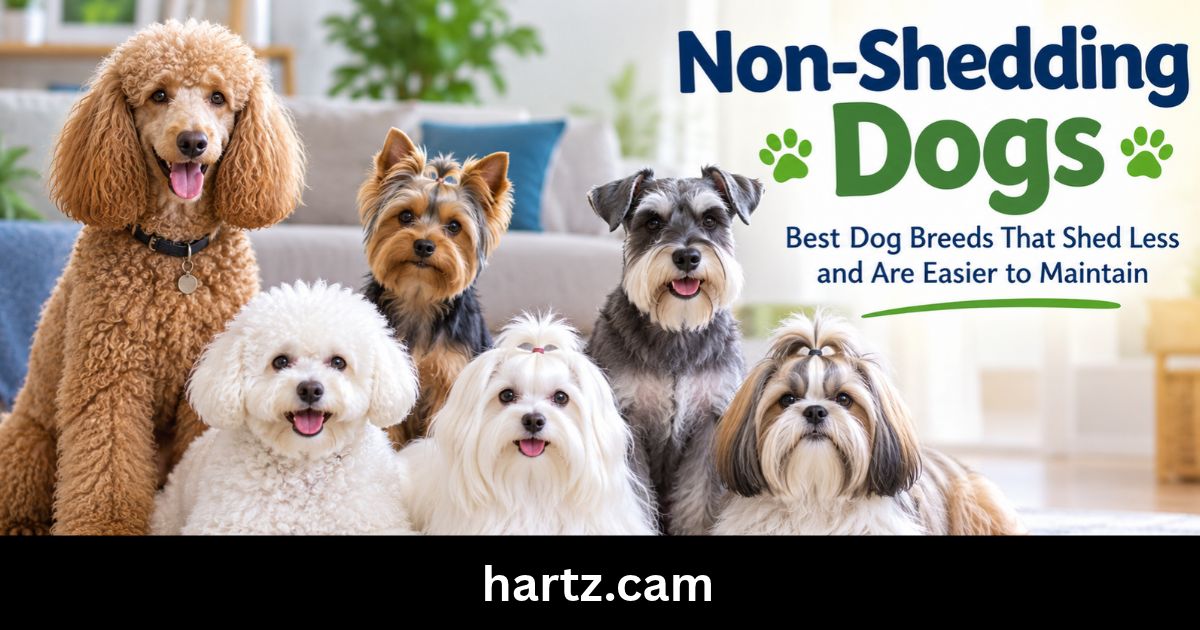
Poodles, Bichon Frises, Maltese, Yorkshire Terriers, Shih Tzus, and Schnauzers are popular low-shedding breeds. Each has different grooming and exercise requirements.
2. Are there completely non shedding dogs?
No. Every dog loses some hair naturally. However, certain breeds shed so little that owners may notice significantly less loose hair around their homes.
3. Which non-shedding dog is best for apartments?
Maltese, Toy Poodles, Bichon Frises, and Yorkshire Terriers are popular apartment-friendly choices. Their exercise, training, and companionship needs must still be met.
4. Are non shedding dogs good for people with allergies?
Some allergy-sensitive individuals tolerate certain low-shedding breeds better. However, these dogs still produce allergens, so reactions are possible.
5. Do non shedding dogs need regular haircuts?
Many do. Breeds such as Poodles and Bichon Frises have continuously growing coats that need regular trimming to prevent excessive hair growth and matting.
6. Which non shedding dogs is easiest to maintain?
There is no universally easiest breed because grooming needs differ. A short haircut can make coat maintenance easier for breeds such as Poodles and Shih Tzus.
7. Are non shedding dogs expensive to maintain?
They can be. Professional grooming, coat-care products, veterinary visits, food, and other everyday expenses contribute to their overall maintenance costs.
Conclusion
Non shedding dogs are excellent companions for people who prefer less loose hair around their homes. Popular choices include Poodles, Maltese, Bichon Frises, Yorkshire Terriers, Shih Tzus, and Schnauzers. These breeds offer different sizes, personalities, and activity levels, making it easier to find a suitable companion.
However, choosing a low-shedding dog also means understanding its grooming, exercise, nutrition, and healthcare requirements. No dog is completely non-shedding or guaranteed to be allergy-free. With proper research and responsible care, you can find a healthy, loving dog that fits comfortably into your lifestyle.