







Table of Contents
Good dental care is an important part of keeping your dog healthy, comfortable, and active. Many pet owners search for dog teeth cleaning near me when they notice bad breath, yellow or brown tartar, red gums, difficulty chewing, or other changes in their pet’s mouth. Dental problems are common in dogs and can become more serious when they are ignored.
Professional veterinary dental cleaning can remove accumulated tartar and allow a veterinarian to identify problems that may not be visible dog teeth cleaning near me during a normal examination. At the same time, regular brushing and appropriate dental products at home can help reduce plaque between professional appointments. Understanding when your dog needs dental care and what to expect from a professional cleaning can make it easier to protect your pet’s overall wellness.
Why Dog Dental Health Matters
A dog’s mouth can collect plaque soon after eating. Plaque contains bacteria and, if it is not regularly removed, it can harden into tartar or calculus. As tartar builds up around the teeth and gumline, it can contribute to inflammation and periodontal dog teeth cleaning near me disease.
Dental disease can cause discomfort and make everyday activities such as eating and chewing more difficult. Dogs may also develop persistent bad breath, swollen gums, loose teeth, or changes in their eating habits.
Searching for dog teeth cleaning near me should not only be about making your pet’s teeth look cleaner. A proper dental examination can help identify problems below the gumline and determine whether treatment is needed.
Good oral hygiene is therefore an important part of complete pet wellness. Along with vaccinations, parasite prevention, proper nutrition, exercise, and regular veterinary checkups, dental care helps support your dog’s quality of life.
Signs Your Dog May Need Professional Teeth Cleaning
Some dogs show obvious signs of dental problems, while others may continue eating normally despite having significant oral disease. Regularly checking dog teeth cleaning near me your dog’s mouth can help you recognize warning signs.
Persistent Bad Breath
Bad breath is one of the most common reasons owners start searching for dog teeth cleaning near me. A mild odor can occur after eating, but persistent or unusually strong breath can indicate plaque, tartar, gum inflammation, or another oral problem.
If your dog’s breath has suddenly become much worse, a veterinary examination can help determine the cause.
Yellow or Brown Tartar
Look at your dog’s teeth when they are calm and comfortable. Yellow, brown, or dark material around the gumline may indicate tartar accumulation.
Once plaque has hardened into calculus, ordinary dog teeth cleaning near me brushing may not remove it effectively. Professional dental cleaning may be required to remove the buildup safely.
Red, Swollen, or Bleeding Gums
Healthy gums should generally look pink and should not regularly bleed. Redness, swelling, tenderness, or bleeding around the teeth may indicate gum inflammation.
These symptoms are a good reason to contact a veterinarian instead of waiting for the problem to become more severe.
Difficulty Chewing
A dog experiencing oral pain may chew more slowly, drop food, avoid certain foods, chew on one side of the mouth, or show less interest in eating.
Some dogs also become irritable when their face or mouth is touched. Any sudden change in eating behavior should be discussed with a veterinarian.
Loose, Broken, or Missing Teeth
Loose or damaged teeth can be painful and may be associated with advanced dental disease or trauma. Never try to pull a loose tooth yourself. A veterinarian can examine the tooth and determine the safest treatment.
What Happens During Professional Dog Teeth Cleaning?
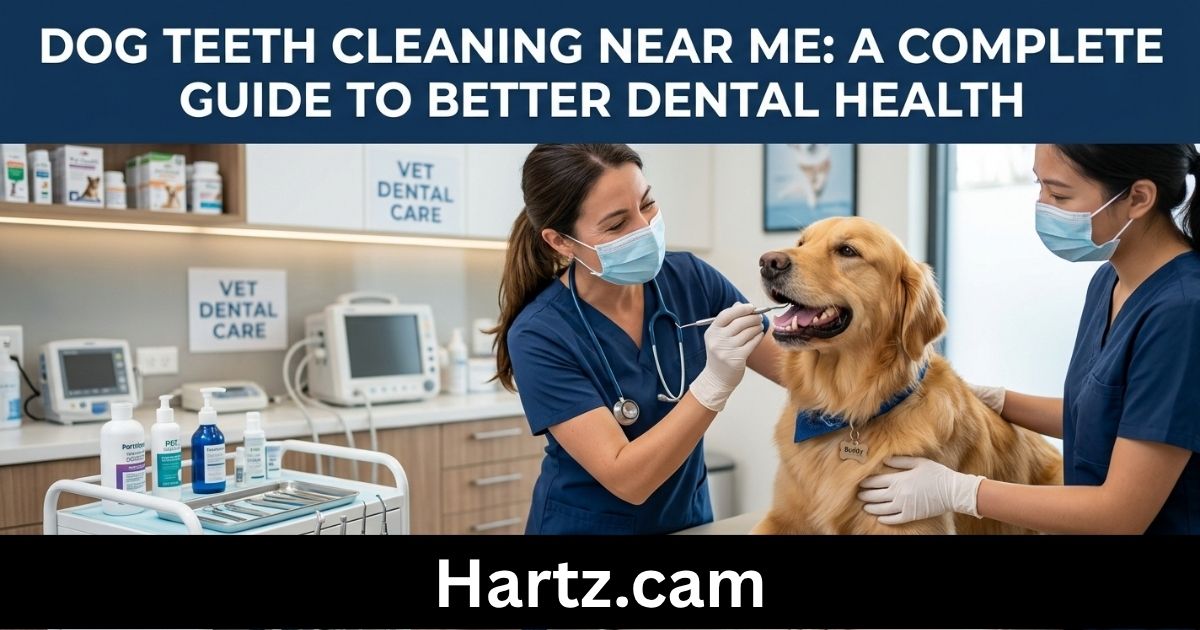
When you search for dog teeth cleaning near me, it is useful to understand what a professional veterinary dental procedure actually involves.
A veterinary dental appointment generally begins with an examination of the mouth. The veterinarian looks for plaque, tartar, gum inflammation, damaged teeth, unusual growths, and other abnormalities.
Depending on your dog’s age, health, and dog teeth cleaning near me dental condition, the veterinary team may recommend blood testing before anesthesia. Dental X-rays may also be recommended because important problems can exist underneath the gumline.
During a comprehensive dental procedure, the veterinary team can remove plaque and tartar from the teeth, including areas around and below the gumline. The teeth dog teeth cleaning near me may then be polished to create a smoother surface that makes future plaque accumulation more difficult.
If a tooth is severely damaged or diseased, extraction may sometimes be necessary. Your veterinarian should explain any recommended treatment and discuss the expected costs.
Why Professional Veterinary Cleaning Is Different
A home toothbrush is useful for preventing plaque buildup, dog teeth cleaning near me but it cannot replace professional veterinary dental care when significant tartar or periodontal disease is already present.
A comprehensive veterinary procedure allows the veterinarian to examine the mouth closely and clean areas that are difficult or impossible to reach while the dog teeth cleaning near me dog is awake.
Veterinary dental cleaning also allows the team to identify damaged teeth and other oral abnormalities. In some cases, dental X-rays can reveal problems hidden beneath the gums.
For this reason, owners should consider professional dental care part of preventive wellness rather than simply a cosmetic service.
Is Anesthesia Used for Dog Teeth Cleaning?
One of the most common questions owners ask when searching for dog teeth cleaning near me is whether anesthesia is necessary.
Comprehensive veterinary dental cleaning is generally performed under anesthesia. This allows the veterinary team to keep the dog safely still while examining and cleaning the teeth, particularly below the gumline.
Anesthesia also allows dental X-rays and other necessary procedures to be performed safely. The veterinarian can assess your dog’s individual health and determine what type of anesthesia and monitoring are appropriate.
If you are concerned about anesthesia, discuss dog teeth cleaning near me your concerns with the veterinary clinic before scheduling the procedure. The veterinarian can explain the risks, preparation, monitoring, and recovery process.
What About Anesthesia-Free Dental Cleaning?
Some services advertise anesthesia-free dog dental cleaning. While the idea may sound attractive because it can appear simpler or less expensive, it has important limitations.
A dog that is awake cannot reliably cooperate with a thorough dental examination. It can also be difficult to safely clean underneath the gumline or identify problems affecting tooth roots.
Simply scraping visible tartar from the front of the teeth may make the teeth appear cleaner without addressing disease beneath the gums.
If your dog has significant tartar or signs of dental dog teeth cleaning near me disease, a veterinary examination is generally the better starting point. Ask your veterinarian which dental procedure is appropriate for your pet.
How to Choose Dog Teeth Cleaning Near Me
Choosing the nearest clinic is convenient, but it should not be the only factor you consider. When searching for dog teeth cleaning near me, look for a veterinary practice with appropriate dental equipment and qualified veterinary professionals.
Ask whether the clinic provides a complete dental examination, professional scaling and polishing, dental X-rays when needed, anesthesia monitoring, and treatment for damaged or diseased teeth.
It is also helpful to ask what the quoted price includes. Some clinics may provide a basic estimate for cleaning while additional costs can apply for blood tests, X-rays, extractions, medications, or other treatments.
A good veterinary clinic should be willing to explain the procedure clearly and answer questions about your dog’s safety and recovery.
How Often Should a Dog Have Its Teeth Cleaned?
There is no universal schedule that applies to every dog. Some dogs develop tartar quickly, while others maintain healthier mouths with consistent home care.
Your veterinarian can recommend a dental examination schedule based on your dog’s age, breed, size, previous dental history, diet, and overall oral condition.
Small dogs and some breeds may be particularly prone to dental problems because their teeth can be crowded in a relatively small mouth. Older dogs may also require more attention as dental problems can accumulate over time.
Regular veterinary examinations make it easier to detect dental disease early rather than waiting until your dog develops obvious symptoms.
How to Clean Your Dog’s Teeth at Home
Professional dental cleaning is important, but home care plays an equally valuable role in maintaining oral hygiene between veterinary appointments.
Brush Your Dog’s Teeth
Regular brushing is one of the most effective ways to control plaque. Ideally, teeth should be brushed every day, although consistent brushing several times per week can still be helpful.
Use a toothbrush designed for dogs and toothpaste specifically made for pets. Human toothpaste should not be used because some ingredients may be unsafe for dogs.
Start slowly if your dog has never had its teeth brushed. Let your dog become comfortable with the toothbrush and the sensation of having its mouth handled before attempting a full brushing session.
Use Appropriate Dental Products
Dental chews, specially designed dental diets, water dog teeth cleaning near me additives, and other products may help support oral hygiene. However, not every product provides the same benefits.
When possible, ask your veterinarian which products are suitable for your dog’s size, age, chewing habits, and dental condition.
Dental products should supplement—not replace—regular veterinary examinations and appropriate brushing.
What Does Dog Teeth Cleaning Cost?
The cost of professional dog teeth cleaning varies from one clinic to another. Location, the dog’s size and age, anesthesia, pre-anesthetic testing, dental X-rays, medications, and extractions can all affect the final price.
A straightforward cleaning may cost less than a procedure involving several diseased teeth that need extraction.
When comparing dog teeth cleaning near me, avoid choosing a clinic based only on the cheapest advertised price. Instead, ask what services are included and whether additional treatment could change the estimate.
A detailed estimate from the veterinary clinic can help you understand the expected expenses before the procedure.
How to Prepare Your Dog for a Dental Appointment
Your veterinary clinic will provide specific instructions before the procedure. These may include fasting instructions and information about medications your dog currently takes.
Follow the clinic’s instructions carefully because proper preparation can help reduce complications.
Tell the veterinarian about any existing health problems, medications, supplements, previous reactions to anesthesia, or unusual symptoms you have noticed.
After the procedure, your dog may need some time to recover from anesthesia. The veterinary team will provide instructions regarding food, activity, medication, and follow-up care.
When Should You Contact a Veterinarian?
Do not wait for a routine cleaning if your dog is experiencing severe oral symptoms. Contact a veterinarian if you notice facial swelling, significant bleeding, severe bad breath, difficulty eating, excessive drooling, broken teeth, loose teeth, or obvious signs of mouth pain.
A sudden refusal to eat can also require prompt veterinary attention, particularly when accompanied by other symptoms.
Early professional assessment can help identify the underlying problem and prevent a minor dental issue from developing into a more complicated condition.
FAQs About Dog Teeth Cleaning Near Me
1. How can I find dog teeth cleaning near me?
Search for veterinary clinics in your area that specifically provide professional dental services. Before booking, ask whether the clinic offers dental examinations, professional cleaning, X-rays when needed, anesthesia monitoring, and treatment for dental disease.
2. How often should I brush my dog’s teeth?
Daily brushing is ideal for controlling plaque. If daily brushing is difficult, establish a consistent routine and ask your veterinarian for practical recommendations based on your dog’s dental health.
3. Does professional dog teeth cleaning hurt?
The procedure itself is performed under veterinary supervision and anesthesia, which allows the dental team to clean and examine the mouth safely. Your veterinarian can also provide appropriate pain management when dental treatment such as extractions is required.
4. Can I remove tartar from my dog’s teeth at home?
Brushing can help prevent plaque from becoming tartar, but hardened tartar generally requires professional veterinary cleaning. Trying to scrape dog teeth cleaning near me it away yourself can injure the gums or damage the teeth.
5. Is bad breath a sign that my dog needs a dental cleaning?
Persistent bad breath can be a warning sign of dental disease. It is worth having your dog’s mouth examined, especially if bad breath occurs with tartar, red gums, bleeding, or difficulty eating.
6. Is anesthesia-free dog teeth cleaning safe?
Anesthesia-free cleaning has significant limitations because it cannot provide the same level of examination and cleaning below the gumline. Discuss professional veterinary dental options with your veterinarian instead.
7. Can dental disease cause my dog to lose teeth?
Yes. Advanced periodontal disease can damage the tissues supporting the teeth and may eventually result in loose or lost teeth. Early dental care can help protect oral health.
8. Are dental chews enough to keep my dog’s teeth healthy?
Dental chews may provide additional oral-health benefits, but they should not be considered a complete replacement for brushing and veterinary dental examinations. Your veterinarian can recommend appropriate products for your dog.
Conclusion
If you are searching for dog teeth cleaning near me, taking action early can make a meaningful difference to your dog’s comfort and overall wellness. Persistent bad breath, tartar, red gums, chewing difficulties, loose teeth, and other mouth-related changes should not be ignored.
Professional veterinary dental cleaning can address plaque and tartar that cannot be effectively removed at home, while regular brushing and appropriate dental products can help maintain oral hygiene between professional visits.
The best dental-care routine combines regular veterinary examinations with consistent home care. By making your dog’s dental health part of its everyday wellness routine, you can help support healthier teeth, healthier gums, comfortable eating, and a dog teeth cleaning near me better quality of life.