







Table of Contents
Introduction
Cats are naturally curious animals that love exploring, hunting, chasing, and playing. Even indoor cats need regular physical activity and mental stimulation to remain healthy and happy. However, providing enough entertainment can sometimes be challenging, especially when cats spend long hours alone at home. This is where interactive cat toys can make a difference.
Interactive cat toys are designed to encourage cats to move, think, chase, and explore through engaging activities. From automatic laser toys to electronic mice and puzzle feeders, these products offer different ways to keep cats entertained. They can also help prevent boredom, encourage exercise, and support overall pet wellness.
Whether you have a playful kitten or an older indoor cat, choosing the right toys can improve your pet’s daily routine and quality of life.
What Are Interactive Cat Toys?
Interactive cat toys are specially designed play products that encourage active participation rather than simply providing something for cats to look at or touch. They often include moving objects, sounds, lights, textures, or hidden treats that stimulate a cat’s natural instincts.
Unlike traditional stuffed toys, interactive cat toys encourage cats to chase, jump, paw, hunt, and solve simple challenges. Some require direct participation from owners, while others operate automatically and entertain pets independently.
These toys are available in many designs, making it easier for cat owners to find suitable options for different personalities, ages, and activity levels.
Benefits of Interactive Cat Toys for Pet Wellness
Providing appropriate entertainment is an important part of responsible cat ownership. Interactive play supports several aspects of feline health and well-being.
1. Encourage Daily Physical Exercise
Indoor cats may not get enough exercise because they have limited opportunities to explore outdoor environments. Spending too much time resting can contribute to weight gain and other health concerns.
Interactive cat toys encourage running, jumping, stretching, and chasing. Activities such as following an electronic mouse or batting a moving ball help cats stay physically active.
Regular play sessions can support healthy weight management and maintain muscle strength.
2. Improve Mental Stimulation
Cats need mental challenges just as much as physical exercise. Without enough stimulation, they may become bored or develop unwanted behaviors.
Puzzle toys, treat dispensers, and interactive games encourage cats to think and experiment. They must figure out how to move objects, release treats, or reach hidden rewards.
This type of entertainment helps create a more interesting daily environment.
3. Reduce Boredom and Destructive Behavior
A bored cat may scratch furniture, knock objects off tables, excessively vocalize, or become restless. These behaviors can sometimes indicate that the animal needs more stimulation.
Interactive cat toys provide alternative activities that encourage natural play. Giving cats appropriate opportunities to chase and explore may reduce boredom-related behaviors.
However, toys should complement other enrichment activities, including scratching posts, climbing spaces, and social interaction.
4. Support Natural Hunting Instincts
Cats are natural hunters. Even domesticated pets retain instincts to observe, stalk, chase, catch, and investigate moving objects.
Interactive toys that imitate prey movements allow cats to practice these behaviors safely indoors.
Feather wands, moving mice, and unpredictable rolling balls are particularly useful for encouraging hunting-style play.
5. Strengthen the Bond Between Cats and Owners
Playing with your cat is also an opportunity to build trust and improve your relationship.
Using interactive toys together encourages positive communication and gives owners a chance to understand their pets’ personalities.
Short daily play sessions can become an enjoyable part of a cat’s routine.
Different Types of Interactive Cat Toys
There are many types of interactive cat toys available. Understanding their features can help owners choose products that match their pets’ interests.
1. Automatic Laser Toys
Automatic laser toys project moving light patterns that encourage cats to chase and follow them. Some models rotate automatically, creating unpredictable movement.
These toys can be useful for energetic cats that enjoy chasing moving objects.
However, laser play should always be handled carefully. Never shine laser light into a cat’s eyes. Because cats cannot physically catch a light spot, finish the session with a tangible toy or treat so they have an opportunity to complete the hunting sequence.
2. Electronic Moving Mouse Toys
Electronic mouse toys move across floors and imitate the unpredictable movements of small animals. Some include sound effects, while others change direction when they encounter obstacles.
They can encourage cats to stalk, chase, and pounce.
These toys are especially interesting for cats that enjoy hunting small moving objects.
3. Interactive Puzzle Feeders
Puzzle feeders combine playtime with feeding activities. Cats must move pieces, slide compartments, or manipulate objects to access small amounts of food.
They encourage problem-solving and can make mealtimes more engaging.
Puzzle feeders are available in different difficulty levels. Beginners should start with simple designs before introducing more challenging activities.
4. Automatic Rolling Balls
Automatic rolling balls move around the floor, sometimes changing direction or producing gentle sounds.
Their unpredictable movements can attract curious cats and encourage spontaneous play.
Look for models with durable construction, secure components, and appropriate sizing to prevent accidental swallowing.
5. Feather Wand Toys
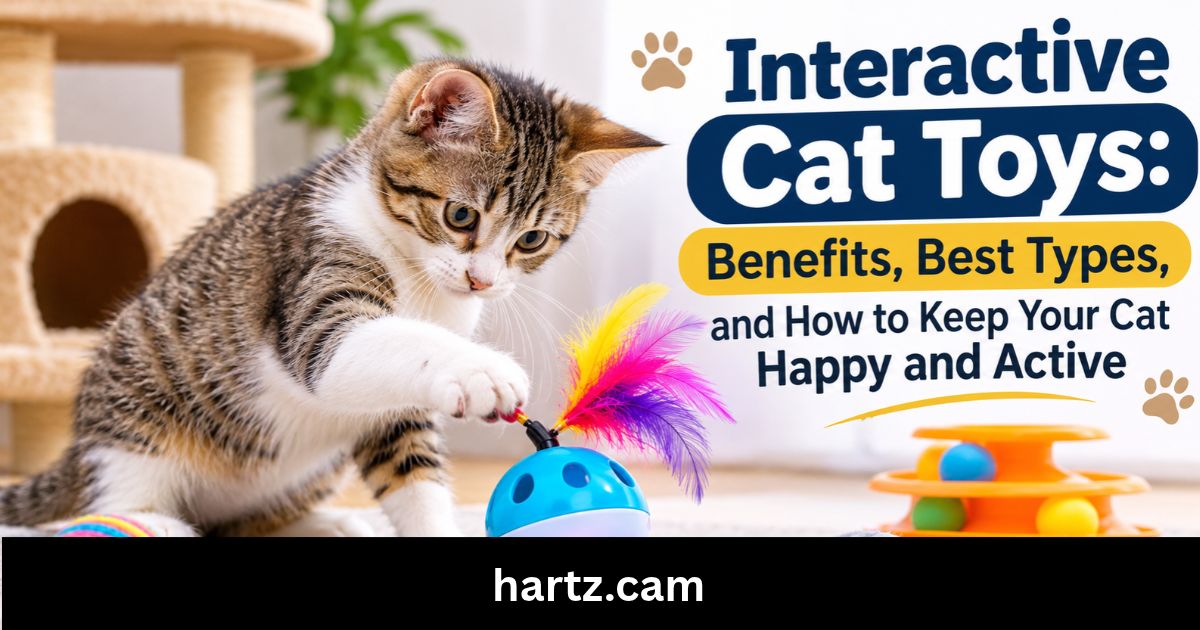
Feather wands are simple but effective interactive cat toys. Owners control the movement of feathers or attached objects to imitate flying birds or small prey.
They encourage jumping, stretching, stalking, and chasing.
Always supervise wand play and store the toy safely afterward, especially if it contains strings or small detachable pieces.
6. Cat Tunnels and Interactive Play Mats
Cat tunnels and play mats create opportunities for hiding, exploring, and chasing.
Cats often enjoy running through tunnels, hiding inside them, and surprising their owners during playtime.
These products can also make indoor environments more interesting by introducing new spaces and textures.
How to Choose the Best Interactive Cat Toys
Not every cat enjoys the same type of entertainment. Some prefer chasing fast-moving objects, while others enjoy solving puzzles or quietly exploring.
Consider the following factors when selecting interactive cat toys.
Consider Your Cat’s Age
Kittens usually have high energy levels and enjoy toys that encourage chasing and exploration. Lightweight balls, feather wands, and soft moving toys can be suitable choices.
Adult cats may benefit from a combination of physical and mental activities.
Older cats may prefer slower-moving toys, simple puzzles, and gentle play sessions that match their mobility.
Understand Your Cat’s Personality
Observe how your cat naturally behaves.
- Active cats may enjoy electronic toys and rolling balls.
- Curious cats may prefer puzzle feeders.
- Hunting-oriented cats may enjoy feather wands and moving mice.
- Shy cats may feel more comfortable with quiet toys.
- Food-motivated cats may enjoy treat-dispensing puzzles.
Choosing toys based on personality can make playtime more enjoyable.
Check Safety and Material Quality
Safety should always be a priority when purchasing pet products.
Choose toys made from durable, non-toxic materials with securely attached components. Avoid products with easily detachable decorations, sharp edges, or small parts that could become choking hazards.
Inspect toys regularly for damage and replace broken products.
Look for Easy Cleaning and Maintenance
Cat toys can collect fur, dust, saliva, and food particles. Select products that are easy to clean and maintain.
Puzzle feeders should be washed according to the manufacturer’s instructions, while electronic toys should be cleaned carefully without damaging their internal components.
How to Introduce Interactive Toys to Your Cat
Some cats immediately become interested in new toys, while others need time to investigate them.
Start by placing the toy near your cat and allowing it to explore naturally. Avoid forcing interaction.
Use gentle movements to attract attention. If your cat shows interest, gradually increase the activity.
Keep initial play sessions short and enjoyable. Reward positive participation with praise, affection, or an appropriate treat.
If your cat appears frightened or loses interest, stop and try again later with a different type of toy.
How Much Playtime Does a Cat Need?
Most healthy adult cats benefit from several short play sessions throughout the day.
A useful starting point is two or three sessions lasting approximately 10–15 minutes each. However, the ideal amount depends on your cat’s age, health, personality, and energy level.
Kittens may enjoy frequent short activities, while senior cats may prefer gentle and less demanding play.
Watch your pet’s behavior and allow breaks whenever necessary. Play should be enjoyable rather than exhausting.
Common Mistakes to Avoid When Using Interactive Cat Toys
Although interactive toys offer many benefits, improper use can reduce their effectiveness or create safety problems.
Leaving damaged toys available: Broken components, loose strings, and exposed batteries can create hazards. Inspect toys regularly.
Using the same toy every day: Cats may lose interest when their environment becomes predictable. Rotate different toys to maintain curiosity.
Ignoring supervision: Some electronic toys can become damaged during rough play. Monitor your cat, especially when introducing unfamiliar products.
Choosing inappropriate toys: Very small toys may be dangerous for larger cats, while complicated puzzles may frustrate beginners.
Replacing human interaction completely: Automatic toys are useful, but they cannot replace attention, affection, and supervised play with owners.
FAQs About Interactive Cat Toys
1. Are interactive cat toys good for indoor cats?
Yes. Interactive cat toys provide indoor cats with opportunities for exercise, mental stimulation, and hunting-style activities. They help make indoor environments more engaging.
2. What are the best interactive cat toys for bored cats?
Puzzle feeders, electronic mice, automatic rolling balls, feather wands, and interactive tunnels are popular options. The best choice depends on your cat’s personality and preferences.
3. Can interactive cat toys help cats lose weight?
They can support weight management by encouraging physical activity. However, healthy weight loss also requires appropriate nutrition, portion control, and veterinary guidance when necessary.
4. Are automatic cat toys safe?
Many automatic cat toys are safe when properly designed and used according to manufacturer instructions. Always check for loose parts, damaged batteries, and potential choking hazards.
5. How often should I replace my cat’s toys?
There is no fixed replacement schedule. Inspect toys regularly and replace them whenever they become damaged, develop loose components, or become unsafe.
6. Do cats get bored with interactive toys?
Yes. Some cats lose interest when they repeatedly encounter the same activities. Rotating toys and introducing different play styles can help maintain excitement.
7. Are interactive toys suitable for senior cats?
Yes. Senior cats can enjoy interactive toys, especially lightweight balls, simple puzzles, and gentle feather toys. Choose activities that match their physical abilities and comfort levels.
Conclusion
Interactive cat toys are valuable tools for improving indoor enrichment and supporting overall pet wellness. They encourage physical exercise, mental stimulation, natural hunting behaviors, and positive interaction between cats and their owners.
From electronic mice and automatic rolling balls to puzzle feeders and feather wands, there are many options to explore. The most important thing is to select safe, age-appropriate toys that match your cat’s personality and activity level.
By introducing regular play sessions, rotating different toys, and supervising activities, cat owners can create a more stimulating environment. A combination of proper nutrition, veterinary care, affection, and engaging play can help cats enjoy healthier and happier lives.