





Table of Contents
A lynx point Siamese kitten is a beautiful and affectionate cat known for its striking blue eyes, pointed coat, and distinctive tabby-like markings. These kittens combine the elegant appearance of Siamese cats with delicate stripes around their faces, legs, and tails. Their playful personalities, intelligence, and strong attachment to their families make them appealing companions for many cat lovers.
Whether you are thinking about adopting a lynx point Siamese kitten or already have one at home, understanding its appearance, temperament, nutrition, grooming, and health needs can help you provide the best possible care. This guide covers the essential information you need to raise a happy, healthy kitten.
What Is a Lynx Point Siamese Kitten?
A lynx point Siamese is a Siamese-type cat with color-point coloring and tabby-style stripes. The term “lynx point” describes the combination of the pointed coat pattern and the darker striped markings that resemble those of a wild lynx.
These cats typically have a light-colored body, darker ears, a colored facial mask, and striped legs and tails. Their appearance can vary depending on their underlying color, genetics, and whether they come from a traditional Siamese line or a Siamese-type cross.
Lynx point is a coat pattern and color description rather than a separate universally recognized cat breed. Breed registration organizations may classify these cats differently depending on their ancestry and their specific breed standards.
Appearance and Physical Characteristics
Coat Color and Markings
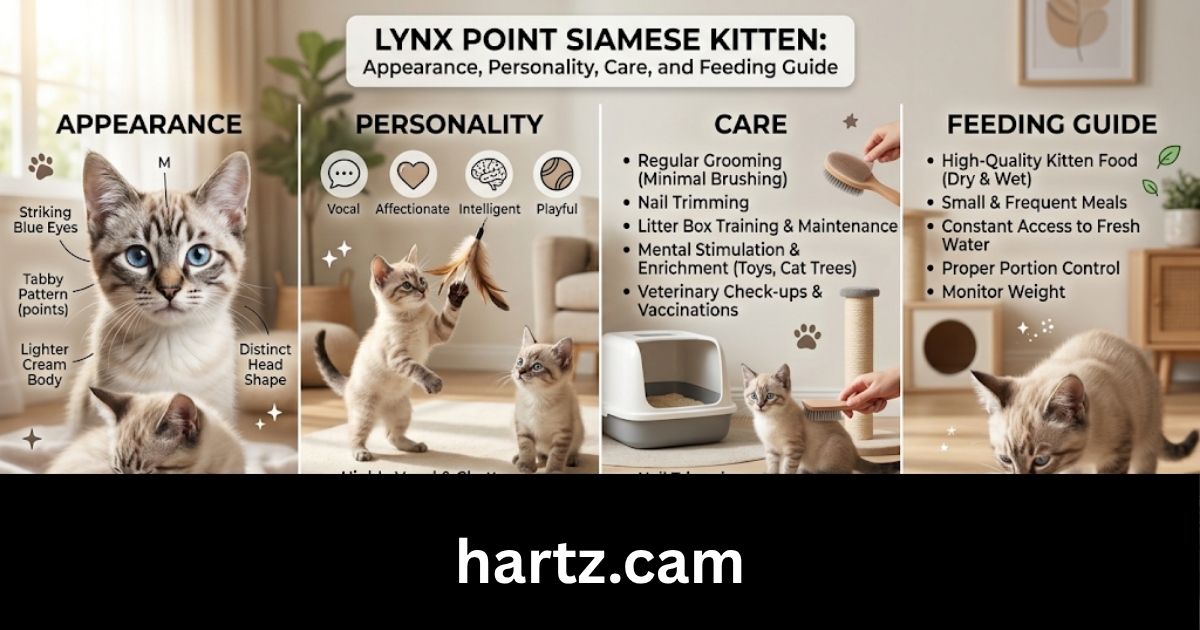
One of the most noticeable features of a lynx point Siamese kitten is its coat. The body is generally cream, ivory, or pale beige, while the ears, face, paws, and tail display darker coloring. Tabby-style stripes create the characteristic lynx point appearance.
Common color variations include:
- Seal lynx point: Dark brown or nearly black markings with a pale body.
- Blue lynx point: Cool gray-blue markings with a lighter body.
- Chocolate lynx point: Warm chocolate-colored points and stripes.
- Lilac lynx point: Soft grayish-pink or pale lavender-toned markings.
- Red or flame lynx point: Creamy bodies with orange, reddish, or golden points and stripes.
Exact color names and accepted patterns depend on the cat’s ancestry and the registration organization.
Blue Eyes
Blue eyes are a classic feature of Siamese-type cats. Their eye color contrasts beautifully with their light coats and darker facial markings. A kitten’s eyes can look different as it grows, but the familiar blue appearance often remains into adulthood.
Size and Growth
Lynx point Siamese kittens are generally slender, athletic, and graceful. Their adult size depends on genetics, sex, diet, and overall health. Many Siamese-type cats reach approximately 6–12 pounds as adults, although individual cats may fall outside this range.
lynx point siamese kitten grow rapidly during their first months. Regular veterinary visits help ensure that their weight, development, and body condition are progressing appropriately.
Personality and Temperament
Affectionate and Social
Lynx point Siamese kittens are often affectionate and enjoy spending time with their human companions. Many follow family members around the house, sit nearby while people work, or curl up beside someone when they rest.
Individual personalities vary, but these cats generally benefit from regular interaction and a stable home environment.
Intelligent and Curious
Siamese-type cats are known for their intelligence and curiosity. A lynx point kitten may investigate cabinets, explore new objects, learn routines quickly, and enjoy puzzle feeders.
Interactive toys, climbing structures, and short training sessions can provide valuable mental stimulation. Some kittens can even learn simple tricks, such as responding to their names or touching a target with their paws.
Playful and Vocal
Many lynx point Siamese kittens enjoy chasing toys, climbing, and playing interactive games. They may also communicate through meows, chirps, and other vocal sounds.
Because some Siamese-type cats are particularly vocal and people-oriented, they may become bored or unsettled when left alone for extended lynx point siamese kitten periods. Daily playtime and companionship can help meet their social needs.
How to Care for a Lynx Point Siamese Kitten
Create a Safe Home
Before bringing your kitten home, prepare a quiet area with a comfortable bed, food and water bowls, a litter box, and age-appropriate toys. Allow the kitten to explore gradually rather than giving it access to every room immediately.
Secure windows, cover exposed electrical cords, remove toxic plants, and keep cleaning products and small swallowable objects out of reach. Provide scratching posts and stable climbing areas to support natural feline behaviors.
Establish a Daily Routine
Kittens generally feel more secure when feeding, playtime, and rest follow a predictable routine. Give your kitten several short play sessions throughout the day and provide quiet spaces where it can sleep without disturbance.
Avoid forcing interactions. Let the kitten approach people voluntarily, especially during its first few days in a new home.
Provide Companionship
Lynx point Siamese kittens often enjoy social contact. Spend time playing, grooming, and interacting with your pet every day. If your schedule keeps you away from home for long periods, consider ways to provide enrichment, such as rotating toys, food puzzles, and safe viewing spots near windows.
A second compatible pet lynx point siamese kitten may help in some households, but another animal is not a guaranteed solution to loneliness. Introductions should be gradual, and each pet should have access to its own resources.
Feeding and Nutrition
Choose Kitten-Specific Food
Growing kittens need food formulated to support development, including appropriate levels of protein, fat, vitamins, minerals, and essential amino acids. Choose a complete and balanced commercial kitten food suitable for your kitten’s age and life stage.
Wet food can contribute to water intake, while dry kitten food may be convenient for some feeding routines. Either can be appropriate when nutritionally complete, and some owners use a combination.
How Often Should You Feed a Kitten?
Young kittens generally need several small meals daily. The exact schedule depends on age, body condition, food type, and veterinary advice. Follow the feeding instructions on the food packaging and adjust portions according to your kitten’s growth rather than automatically increasing the amount.
Fresh, clean water should always be available. Avoid giving cow’s milk, as many cats have difficulty digesting lactose.
Foods to Avoid
Some human foods and household ingredients can be dangerous for cats. Keep your kitten away from chocolate, onions, garlic, alcohol, caffeine, and products containing xylitol. Never give cooked bones, and avoid raw diets unless you have discussed the risks and nutritional requirements with a qualified veterinary professional.
If your kitten eats something potentially toxic, contact a veterinarian promptly rather than waiting for symptoms to appear.
Grooming and Hygiene
Coat Care
Lynx point Siamese cats typically have short, close-fitting coats that require relatively little maintenance. Brushing once or twice a week is often sufficient to remove loose hair and help keep the coat clean.
Regular brushing also provides an opportunity to check for skin irritation, parasites, or unusual lumps.
Nail Trimming and Dental Care
Introduce nail handling gradually, using rewards to create a positive experience. Trim only the sharp tips of the claws and avoid cutting the sensitive inner portion.
Dental care is also important. Use a cat-safe toothbrush and toothpaste when your kitten is comfortable with the process. Never use human toothpaste, as some ingredients can be harmful to pets.
Litter Box Maintenance
Choose a litter box that your kitten can enter easily. Place it in a quiet, accessible location away from food and water bowls. Scoop waste regularly and wash the box as needed.
In a home with multiple cats, providing enough litter boxes in separate locations can help reduce competition and encourage good litter habits.
Health Care and Veterinary Visits
Vaccinations and Preventive Care
Schedule a veterinary examination soon after adopting your kitten. Your veterinarian can assess its overall health, estimate its age if necessary, and recommend a vaccination schedule.
Core feline vaccinations commonly protect against feline panleukopenia, feline herpesvirus, and feline calicivirus. Rabies vaccination depends on local laws, exposure risks, and veterinary guidance. FeLV vaccination may be recommended based on age and risk.
Ask your veterinarian about parasite prevention, deworming, microchipping, and the appropriate timing of spaying or neutering.
Potential Health Concerns
Lynx point Siamese kittens may inherit health risks associated with their particular breed ancestry. Depending on their lineage, Siamese-type cats can be predisposed to certain eye conditions, dental issues, and other inherited disorders.
This does not mean that every lynx point Siamese kitten will develop health problems. Responsible breeding, preventive care, and early veterinary attention can make a meaningful difference.
Contact a veterinarian if your kitten develops persistent vomiting, diarrhea, breathing difficulties, unusual lethargy, eye discharge, poor appetite, or difficulty urinating. Very young kittens can deteriorate quickly, so prompt assessment is important when concerning symptoms occur.
Training and Socialization
Early positive experiences help kittens become more comfortable with people, everyday household sounds, grooming, and veterinary handling.
Use rewards such as praise, play, or small kitten-safe treats to encourage desirable behavior. Keep training sessions short and enjoyable. Avoid shouting or physical punishment, which can cause fear and damage trust.
Provide scratching posts to redirect natural scratching behavior, and reward your kitten for using them. If biting occurs during play, stop the interaction briefly and offer an appropriate toy instead of encouraging the kitten to attack hands or feet.
How Much Does a Lynx Point Siamese Kitten Cost?
The price of a lynx point Siamese kitten varies by location, breeder reputation, ancestry, age, and veterinary care already provided. Kittens from established breeders may cost more when they come with documented health screening, vaccination records, and pedigree information.
Adoption through an animal shelter or rescue organization may be less expensive, although availability varies. Remember to budget for food, litter, routine veterinary visits, vaccinations, parasite prevention, toys, scratching equipment, and unexpected medical expenses.
Before paying a breeder, ask for health records and information about the kitten’s parents. Be cautious of sellers who refuse to provide documentation, pressure you to pay quickly, or offer to deliver a kitten without allowing reasonable verification of its condition and background.
Is a Lynx Point Siamese Kitten Right for You?
A lynx point Siamese kitten can be an excellent companion for someone who wants an interactive, playful, and affectionate cat. These kittens often thrive in homes where people have time for daily engagement, enrichment, and consistent care.
They may be less suitable for households that expect a highly independent pet that requires little interaction. However, personality lynx point siamese kitten differs from one kitten to another, so meet the individual cat and ask about its behavior before making a decision.
The best match is a kitten whose temperament, activity level, and social needs fit your lifestyle and home environment.