




Table of Contents
Animax is a prescription veterinary ointment commonly used for certain skin, ear, and related infections in dogs and cats. It contains a combination of antibacterial, antifungal, and anti-inflammatory ingredients, making it useful when inflammation occurs alongside certain bacterial or fungal infections. Because contains a corticosteroid and antibiotics, it should be used according to a veterinarian’s instructions rather than as a general-purpose pet skin cream.
If you are researching for pet wellness, understanding what it does, when it may be prescribed, how it is applied, and what precautions matter can help you use the medication responsibly.
What Is Animax?
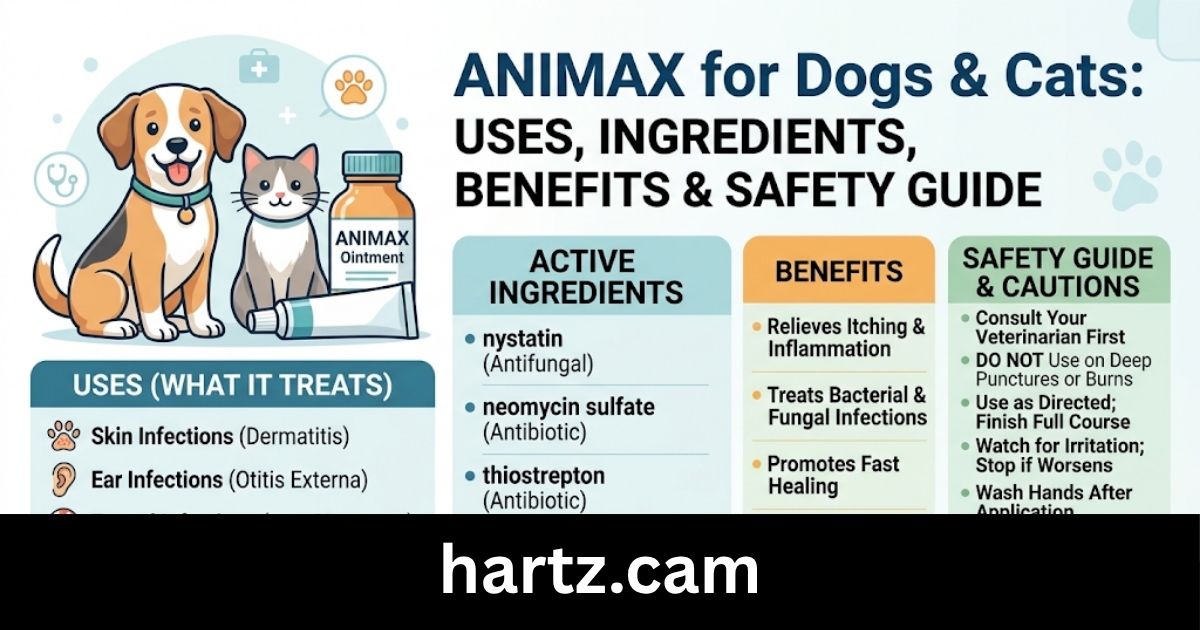
Ointment is a topical veterinary medication formulated for dogs and cats. The current product label identifies four active ingredients: nystatin, neomycin sulfate, thiostrepton, and triamcinolone acetonide. It is intended for local treatment of various cutaneous disorders and conditions involving bacterial or Candida infections.
The medication is also used in veterinary practice for certain ear conditions and other localized problems. Since is a prescription animal drug, a veterinarian should determine whether it is appropriate for a particular pet and condition.
What Are the Ingredients in Animax?
works through four active ingredients, each serving a different purpose.
Nystatin
Nystatin is an antifungal medication. It is particularly useful against susceptible yeast organisms, including Candida. This makes it relevant when a localized skin or ear problem involves certain fungal or yeast infections.
Neomycin
Neomycin is an antibiotic that works against susceptible bacteria. It provides antibacterial activity against a range of organisms associated with superficial infections.
Thiostrepton
Thiostrepton is another antibacterial ingredient. It works alongside neomycin to provide additional activity against susceptible bacteria, particularly certain gram-positive organisms.
Triamcinolone Acetonide
Triamcinolone is a corticosteroid. Its primary role is reducing inflammation, swelling, and itching. This can help make an inflamed area more comfortable while the other ingredients address susceptible microorganisms.
Together, these ingredients give antibacterial, antifungal, anti-inflammatory, and antipruritic properties.
What Is Animax Used For?
Veterinarians may prescribe for a variety of localized conditions affecting dogs and cats. The official label specifically describes its use for acute and chronic otitis of various causes, interdigital cysts in dogs and cats, and anal gland infections in dogs. It is also indicated for certain inflammatory skin disorders, including some forms of dermatitis associated with bacterial or Candida infection.
Veterinary references also describe its use for localized skin, ear, and anal-gland problems. The exact reason for prescribing it depends on the animal’s symptoms, examination findings, and suspected cause.
Animax for Ear Problems
Animax may be prescribed for certain bacterial or yeast-associated ear infections. Ear disease in dogs and cats can have several causes, however, including allergies, parasites, foreign bodies, bacteria, and yeast.
For that reason, simply seeing redness or an unpleasant odor does not necessarily mean is appropriate. A veterinarian may need to examine the ear and determine the underlying problem before recommending treatment.
Animax for Skin Conditions
The medication may be used for selected inflammatory skin conditions, including dermatitis where susceptible bacteria or Candida organisms are involved. Its corticosteroid component can reduce itching and inflammation while its antimicrobial ingredients address certain microorganisms.
Interdigital Cysts
Interdigital cysts are inflamed lesions that can occur between a dog’s toes. The official labeling lists interdigital cysts in dogs and cats among its indications. A veterinarian should still determine whether the lesion is suitable for topical treatment or requires another approach.
Anal Gland Infections
Animax is also labeled for anal gland infections in dogs. Anal gland problems can sometimes require cleaning, expression, drainage, or other veterinary treatment, so topical medication should not replace professional assessment when an infection is suspected.
How Does Animax Work?
combines several types of treatment in one ointment. The antibiotics target susceptible bacteria, nystatin targets susceptible fungal organisms, and triamcinolone helps control inflammation and itching.
This combination can be useful when a localized condition has both infectious and inflammatory components. However, the presence of several active ingredients does not mean is appropriate for every skin rash or ear problem.
A correct diagnosis remains important because some conditions may require different medications or treatment strategies.
How to Apply Animax
should be applied exactly as directed by your veterinarian or according to the product instructions. The appropriate amount and frequency can vary depending on the location and severity of the condition.
Before applying a topical medication, the affected area may need to be cleaned according to veterinary instructions. When is prescribed for an ear problem, the veterinarian may provide specific instructions for placing the ointment into the ear canal.
Avoid changing the frequency or amount on your own simply because the condition appears to be improving. Likewise, do not continue treatment indefinitely without veterinary guidance.
Important Safety Precautions
Animax is labeled for use in dogs and cats, and the product is a prescription animal drug.
One important consideration is its corticosteroid component. Steroid-containing medications can reduce inflammation and itching, but inappropriate use may mask symptoms or be unsuitable for certain infections or wounds.
The official label also states that is not intended for deep abscesses or deep-seated infections. Such conditions may require systemic or other veterinary treatment rather than relying on a topical ointment.
Pet owners should also prevent unnecessary licking or ingestion of the medication when possible. Your veterinarian can explain whether additional precautions, such as an Elizabethan collar, are appropriate for your pet.
Possible Side Effects
The official labeling states that cutaneous reactions associated with have been extremely rare and that systemic reactions are rarely a problem with topical administration.
Nevertheless, any medication can potentially cause an unwanted reaction. Contact your veterinarian if your pet develops worsening redness, swelling, irritation, discomfort, unusual behavior, or other concerning symptoms after treatment.
If your pet accidentally consumes a significant amount of the ointment, contact a veterinarian promptly for advice.
When Should You Contact a Veterinarian?
Veterinary attention is particularly important if an infection appears severe, rapidly worsens, produces substantial discharge, causes significant pain, or does not improve as expected.
For ear problems, symptoms such as persistent head shaking, scratching, odor, discharge, or sensitivity should be evaluated rather than repeatedly treated at home. Ear disease can have underlying causes that require more than a topical medication.
Similarly, a persistent skin lesion should be diagnosed before repeated use of a steroid-containing product.
Animax and Overall Pet Wellness
Medication is only one part of responsible pet wellness. Dogs and cats benefit from regular veterinary examinations, appropriate vaccinations, parasite prevention, balanced nutrition, dental care, grooming, exercise, and attention to changes in their skin and behavior.
If has been prescribed, following the complete treatment plan is important. Keeping the affected area clean as instructed and monitoring your pet’s response can also help your veterinarian determine whether the treatment is working.
Frequently Asked Questions About Animax
1. What is Animax used for in dogs?
is used for certain localized skin and ear conditions and is specifically labeled for conditions including acute and chronic otitis, interdigital cysts, and certain inflammatory skin disorders. It is also labeled for anal gland infections in dogs.
2. Can cats use Animax?
Yes. The official label identifies for use in dogs and cats. However, it should be used under veterinary direction because the appropriate treatment depends on the cat’s specific condition.
3. Is Animax an antibiotic?
contains two antibacterial ingredients, neomycin and thiostrepton. It also contains nystatin, an antifungal, and triamcinolone, a corticosteroid. Therefore, it is a combination medication rather than a simple antibiotic ointment.
4. Does Animax treat yeast infections?
contains nystatin, which provides antifungal activity against susceptible organisms, including Candida. Whether it is appropriate for a particular yeast infection depends on the location, diagnosis, and individual pet.
5. Can I use Animax on my pet without seeing a veterinarian?
Animax is a prescription veterinary medication in the United States and is intended to be used by or on the order of a licensed veterinarian. Using it without an appropriate diagnosis can delay proper treatment or expose a pet to unnecessary medication.
6. Is Animax safe for dogs and cats?
It is labeled for dogs and cats, but safety depends on appropriate use. Because it contains antibiotics, an antifungal, and a corticosteroid, pet owners should follow veterinary instructions regarding where, how often, and how long it should be used.
7. How should Animax be stored?
The current product information says to store Animax at room temperature and avoid excessive heat above 104°F (40°C). Always check the product packaging for current storage instructions.
Conclusion
Animax is a combination veterinary ointment designed to address certain localized bacterial, fungal, and inflammatory conditions in dogs and cats. Its four active ingredients—nystatin, neomycin, thiostrepton, and triamcinolone—provide antifungal, antibacterial, anti-inflammatory, and antipruritic effects.
Because Animax contains prescription-strength antimicrobial and corticosteroid ingredients, responsible use starts with an accurate veterinary diagnosis. When prescribed appropriately and used according to professional instructions, it can be an important part of treatment for selected skin, ear, interdigital, and anal-gland conditions. Pet owners should monitor their animals closely and contact their veterinarian if symptoms worsen, fail to improve, or return after treatment.